
Needle Felting for Beginners: Wool, Needles and Safety
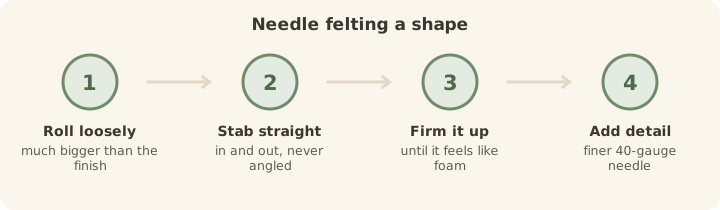
Use carded wool batting for shaping and a 38-gauge star needle for general work, moving to 40-gauge for fine finishing. Work over a foam block and stab straight in and out.
The needles are extremely sharp and barbed — a finger guard is not optional.
How it works
A felting needle has tiny backward-facing barbs along its shaft. Each stab drags wool fibres past one another and tangles them permanently. Repeated stabbing compacts loose wool into firm shapes, which is why you can sculpt with it.
Making your first shape
Roll a loose ball
Take a handful of batting, roll it into a rough sphere and tuck the ends in. It should be much larger than the finished size — wool compacts to about a third of its starting volume.
Stab straight in and out
On the foam block, rotating the shape as you work. Straight is essential — angling the needle while it's in the wool is how needles snap, and they snap often.
Firm up gradually
Keep working until the shape holds together and feels dense. Under-felted work falls apart when handled; well-felted work feels like firm foam.
Add details last
Wrap small wisps of coloured wool over the surface and tack them down with a finer 40-gauge needle, which leaves less visible marking.
Choosing wool
| Wool | Character | Best for |
|---|---|---|
| Carded batting | Fluffy, felts fast | Building the core of a shape |
| Corriedale | Coarse, felts quickly | Beginners and cores |
| Merino tops | Fine, smooth, slower to felt | Surface colour and detail |
| Core wool | Cheap, undyed | Bulking out large pieces cheaply |
These needles genuinely hurt. They are barbed, and a jab takes days to stop stinging. Use leather finger guards on your holding hand, keep needles in a tube when not in use, and never felt with the piece resting on your lap. This is the one craft where the safety advice isn't precautionary.
Wet felting, briefly
The other kind: wool, hot soapy water and friction, agitated by hand until the fibres mat together. It suits flat pieces, bags and slippers rather than sculpture, needs no needles, and is a good deal kinder to fingers. Many felters do both.
Common problems
The shape won't firm up — you're not stabbing enough, or you're using merino, which is slow. Switch the core to corriedale. Needles keep breaking — you're angling them while inserted. The surface looks hairy — go over it with a 40-gauge needle, which smooths loose fibres in.
Questions we're often asked
What needle should I start with for needle felting?
A 38-gauge star needle for general shaping, and a 40-gauge for fine surface detail. Buy several — they break, especially while you're learning.
Why does my needle keep breaking?
You're changing the angle while the needle is inside the wool. Stab straight in and straight out; rotate the piece rather than the needle.
How much wool do I need for a small figure?
Roughly three times the finished volume, since felting compacts the wool to about a third of its loose size. Use cheap core wool inside and good coloured wool on the surface.