
Why wraps per inch works
Yarn weight is really just a way of describing thickness, and thickness is exactly what you're measuring when you count wraps. A fine lace yarn will fit thirty-something strands into an inch; a chunky yarn made for a winter scarf might manage only six or seven. It's the same method spinners have used for generations, and it needs nothing more than a pencil.
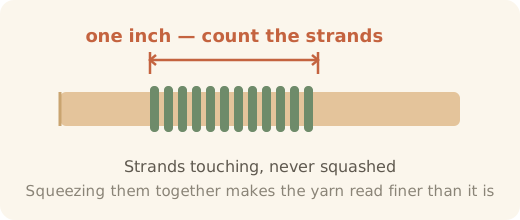
The one thing to watch: wrap gently. If you pull the yarn tight the strands squash together, you'll count too many wraps, and the yarn will seem finer than it is. Let each strand rest against its neighbour and no more.
What to do with your answer
Once you know the weight, you can substitute your mystery yarn into almost any pattern written for that weight — this is how a basket of orphan balls becomes a blanket. Do knit a small swatch first: two yarns of the same weight can still behave differently depending on how they're spun, and ten minutes of swatching has saved many a jumper.
How much will I need?
As a rough guide, an adult scarf takes around 400–600 yards of DK, a baby blanket around 700–900 yards, and an adult jumper anywhere from 1,000 to 1,800 yards depending on size and weight. If your mystery ball has no yardage either, weigh it: most DK yarns run about 220 yards per 100 g, worsted about 200, and chunky about 110.
Questions we're often asked
How do I find out what weight my yarn is without a label?
Wrap the yarn in a single, unstretched layer around a pencil or needle and count how many strands fit within one inch. That number — the wraps per inch — tells you the weight. Around 30 wraps means lace, 12 means DK, and 8 or fewer means chunky.
What is DK yarn called in America?
DK sits between American sport and worsted weights, and is usually sold as "light worsted" or Category 3. In Australia and New Zealand the same yarn is called 8 ply. All of these names appear together in the chart above.
Can I substitute one yarn weight for another?
Within reason, yes — but expect the finished size to change. Going up a weight makes a garment larger and warmer with the same stitch count; going down makes it smaller and lighter. If you must substitute, knit a swatch and adjust your needle size until the stitch count matches the pattern.
Does yarn weight mean how heavy the ball is?
No, and it confuses nearly everyone at first. "Weight" here means the thickness of the strand, not the weight of the ball. A 100 g ball of lace yarn and a 100 g ball of chunky weigh the same but are entirely different yarns.
How many wraps per inch is worsted weight?
Worsted weight yarn — Aran in Britain, 10 ply in Australia — typically gives 9 to 11 wraps per inch. DK sits just above at 11 to 14, and chunky just below at 6 to 8.