
Storing Your Yarn Stash So You Can Actually Use It
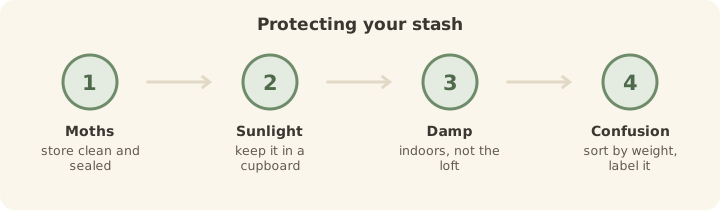
A stash you can't see is a stash you'll buy duplicates of. Good storage is less about tidiness than about being able to answer one question quickly: do I already have enough of something for this?
The three enemies
- Moths. They're drawn to the body oils and food traces on used yarn rather than the wool itself, so store everything clean. Sealed containers, cedar blocks or lavender sachets, and a periodic check of anything wool.
- Sunlight. Fades dyed yarn surprisingly fast. Keep the stash out of direct light — a cupboard beats a pretty open shelf by the window.
- Damp. Lofts and garages swing between hot and cold and often hold moisture. Fibre dislikes both.
Clear boxes beat pretty baskets
Sorting by weight rather than colour is what most people settle on eventually — one box for DK, one for chunky, one for sock yarn. You almost always start a project knowing the weight the pattern needs, so that's the question your storage should answer.
Log it once, use it for years
Our members' stash inventory sheet gives you a row per yarn with grams, yards and what you're keeping it for — with the grams-to-yards sum printed alongside so part-balls become numbers you can plan with.
Label the moment you open a ball
The band comes off, the yarn goes in the basket, and six months later it's a mystery. Tie the band to the ball, or write the weight and yardage on a paper tag. If it's already too late, the yarn identifier will tell you the weight from a wraps-per-inch count.
Weigh, don't guess
Kitchen scales turn "about half a ball" into "108 yards". Weigh part-balls when you put them away and write the figure on the tag — that one habit makes stash-busting projects genuinely possible rather than a gamble.
Keep leftovers by project, not by colour. The scraps from one jumper are the exact yarn you'll want if it ever needs a repair. A small bag with the pattern name on it, tucked in with the finished garment, has saved many a moth-holed elbow.
Needles and hooks
A roll or a labelled case beats a jar, because the point of storage is knowing what you have. Measure and label unmarked needles once — our needle sizer does it in seconds — and you'll never again buy a fourth pair of 4 mm because you couldn't find the other three.
Questions we're often asked
How do I keep moths out of my yarn?
Store yarn clean and sealed. Moths are attracted to residues rather than the fibre itself, so wash or air anything that's been handled a lot, and add cedar or lavender to sealed boxes.
Can I store yarn in the loft or garage?
Not ideally. Both swing between temperature extremes and often hold damp, which encourages mould and attracts pests. A cupboard inside the house is far kinder to fibre.
Should I store yarn in vacuum bags?
For short periods, yes — they keep pests out. For long storage, wool prefers to breathe, and prolonged compression can flatten the loft of the yarn permanently.