
Knitting or Crochet: Which Should You Learn First?
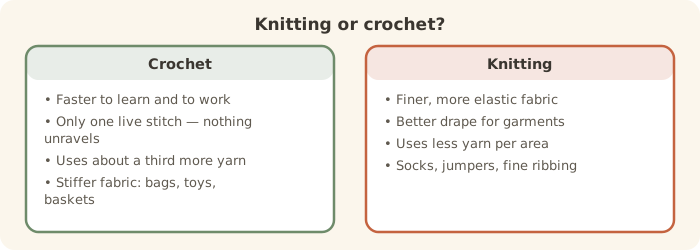
People are surprisingly partisan about this. The truthful answer is that they're different crafts producing different fabrics, and the right first choice depends entirely on what you want to make.
The practical differences
- Crochet is faster to learn and to work. Stitches are taller, so fabric grows more quickly — a crochet blanket takes noticeably less time than a knitted one.
- Knitting produces finer, more drapey fabric. If you want a soft jumper or a delicate lace shawl, knitting gets you there more easily.
- Crochet is more forgiving of mistakes. Only one live stitch is on the hook, so nothing unravels if you put it down. A dropped knitting stitch can run down several rows before you notice.
- Crochet uses more yarn — roughly a third more for the same area, because of how the stitches are built.
- Knitting stretches more, which suits fitted garments and socks. Crochet fabric is stiffer, which suits bags, baskets and amigurumi.
Whichever you pick, start with gauge
Both crafts depend on it. Our gauge calculator handles knitting and crochet, tells you which way to change needle or hook, and converts any pattern's stitch counts to your own gauge.
Learn crochet first if you want to make…
Blankets, amigurumi toys, granny squares, bags, baskets, dishcloths, or anything you'd like finished within a fortnight. Crochet's speed and forgiving nature make early projects genuinely satisfying rather than a test of endurance.
Learn knitting first if you want to make…
Jumpers, cardigans, socks, hats with fine ribbing, or lace shawls. Knitted fabric drapes and stretches in ways crochet doesn't, and garments simply look different.
Which is easier on the hands?
Genuinely individual. Crochet concentrates the work in one hand, which some people with arthritis find harder and others find easier since only one hand is doing anything demanding. Knitting spreads the work but requires holding a needle full of stitches for long periods. Try both if you can — many craft groups will lend you an hour and some spare needles.
Most people eventually do both. They complement each other: crochet edgings on knitted garments, crochet for joining knitted squares, knitted ribbing on a crochet hat. Learning one does not close a door on the other, so don't agonise over the choice.
Starting out in either
Buy smooth, light-coloured, worsted-weight yarn — dark and fluffy yarns hide your stitches and make learning much harder than it needs to be. Make a dishcloth or a simple scarf first, and accept that the first one will look wobbly. Everyone's does.
Questions we're often asked
Is crochet easier than knitting?
Generally yes to learn, because only one live stitch is on the hook and nothing unravels when you put it down. Knitting takes a little longer to become comfortable but produces finer, more elastic fabric.
Does crochet use more yarn than knitting?
Yes, roughly a third more for the same area, because crochet stitches are taller and use more yarn in their construction.
Can I use knitting yarn for crochet?
Yes — yarn is yarn. The ball band suggests both a needle and a hook size, and any yarn will work for either craft.