
Knitting and Crochet Abbreviations: A Plain-English List
Patterns are written in shorthand to save space, which is fine until you meet one you don't recognise halfway through a row. Here are the abbreviations you'll actually encounter, in plain English — and the traps that catch everyone at least once.
The knitting basics
- k — knit. p — purl. st / sts — stitch, stitches.
- k2tog — knit two stitches together as one. A decrease that leans right.
- ssk — slip, slip, knit. A decrease that leans left, the mirror of k2tog.
- m1 — make one. An almost invisible increase worked into the bar between stitches.
- kfb — knit front and back. An easier increase that leaves a small visible bar.
- yo — yarn over. Creates a deliberate hole, used in lace and buttonholes.
- psso — pass slipped stitch over. sl — slip a stitch without working it.
- RS / WS — right side, wrong side. beg — beginning. rem — remaining.
- rep — repeat. pm — place marker. tbl — through the back loop.
The crochet basics
- ch — chain. sl st — slip stitch. st — stitch.
- sc — single crochet. hdc — half double crochet. dc — double crochet. tr — treble.
- sc2tog / dc2tog — work two together, a decrease.
- inc — two stitches in the same stitch. rnd — round. sp — space.
- FO — fasten off, or sometimes "finished object" in conversation.
- BLO / FLO — back loop only, front loop only.
The trap that catches everyone: UK and US crochet terms use the same words for different stitches. A UK double crochet is a US single crochet; a UK treble is a US double crochet. Always check which the pattern uses — if it never mentions "single crochet", it's almost certainly UK terms.
Brackets and asterisks
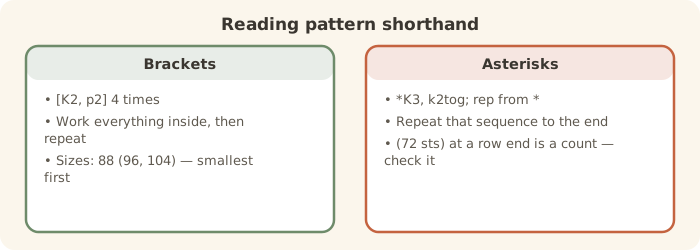
These are where patterns look most alien. [K2, p2] 4 times means work everything in the brackets, then repeat the whole lot four times in total. *K3, k2tog; rep from * to end means work K3 then k2tog over and over until the row runs out.
Numbers in brackets at the end of a row — like (72 sts) — are a stitch count telling you what you should have. Count when you see one. Finding an error at the end of a row is a minor irritation; finding it twenty rows later is an evening lost.
When a pattern says "evenly across"
The phrase patterns never explain. Our increase and decrease calculator turns "decrease 9 stitches evenly across the row" into an instruction you can follow stitch by stitch, in knitting or crochet terms.
Sizes written with slashes
Garment patterns give every size at once: cast on 88 (96, 104, 112) sts. The first number is the smallest size and the brackets hold the rest in order. Before you start, go through the whole pattern with a highlighter and mark your size everywhere it appears. It takes five minutes and prevents the most common garment mistake there is.
Abbreviations worth looking up rather than guessing
If a pattern uses something unusual — a cable notation, a nupp, a bobble, a specific cast-on — most designers include a glossary at the start. Read it before casting on rather than at the moment you meet the instruction, when your hands are already full.