
Hand Embroidery for Beginners: Six Stitches to Start
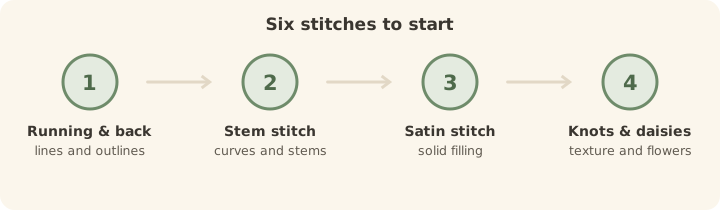
Learn backstitch, running stitch, satin stitch, French knot, lazy daisy and stem stitch. Between them they'll let you work most beginner patterns without needing anything else.
Use two or three strands of stranded cotton on medium-weight fabric, in a hoop pulled drum-tight.
The six stitches
Running stitch
In and out along a line at even intervals. The simplest of all, and lovely for dashed outlines and quilting-style lines.
Backstitch
A solid unbroken line — come up ahead, go back down into the end of the previous stitch. The workhorse for outlines and lettering.
Stem stitch
Overlapping slanted stitches that form a gently twisted rope. Better than backstitch for curves and, as the name says, for stems.
Satin stitch
Parallel stitches worked side by side to fill a shape solidly. Outline the shape in backstitch first and work over it — the edges come out far crisper.
French knot
Wrap the thread twice around the needle, hold it taut, and push back down close to where you came up. Eyes, berries, flower centres and texture.
Lazy daisy
A single looped petal held down with a tiny stitch. Six of them in a circle make a flower, which is most of decorative embroidery.
Working out fabric size
The margin rules for cross stitch apply to embroidery too. Our fabric calculator will tell you what to cut once you've allowed for hoop and framing space.
What to buy
| Item | What to get | Why |
|---|---|---|
| Fabric | Medium-weight cotton or linen | Firm enough to hold stitches without puckering |
| Hoop | 6 or 8 inch wooden | Comfortable to hold and big enough for most motifs |
| Needles | Embroidery, size 7–9 | Sharp, with a long eye for stranded cotton |
| Thread | Stranded cotton, 6-strand | Separate to use 2 or 3 strands as needed |
| Scissors | Small sharp embroidery pair | Precise trimming; keep them for thread only |
Separate your strands and put them back together. Stranded cotton comes as six strands twisted; pull out the number you want individually and lay them side by side before threading. Stitches sit flatter and look markedly smoother than using strands straight off the skein.
Transferring a design
For light fabrics, tape the pattern to a window, tape the fabric over it and trace with a water-soluble pen. For dark fabrics, use dressmaker's carbon paper or a light-coloured chalk pencil. Printable stick-and-stitch stabiliser is the modern option — print the design, stick it on, stitch through it, then dissolve it in water.
Keeping the back tidy
It matters less than beginners fear, but long floats across the back can show through pale fabric and catch when framing. Rather than jumping across, finish a colour in one area and start it afresh nearby. Anchor threads under existing stitches rather than knotting.
Questions we're often asked
How many strands of embroidery floss should I use?
Two or three for most work — two for fine detail and outlines, three for filling. Use one strand for very delicate lines and all six for bold texture.
What fabric is best for embroidery?
Medium-weight cotton or linen with a fairly tight weave. Very loose fabric lets stitches sink in, and very stiff fabric is hard on the fingers.
How do I stop my French knots disappearing?
Wrap twice rather than three or four times, keep the thread taut as you push the needle back down, and go down beside where you came up rather than into the same hole.