
Crochet Borders: How to Finish a Blanket Neatly
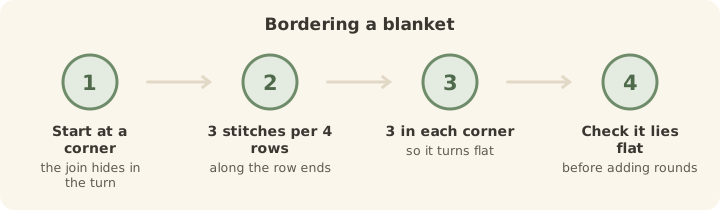
Work a foundation round of single crochet all the way around first, with three stitches in each corner, before starting any decorative border. That one round evens out the edges and gives everything after it something square to build on.
Ruffling means too many stitches per edge; pulling in means too few.
The foundation round
Start in a corner
Beginning mid-edge leaves a visible join. Start at a corner and the change of round hides in the turn.
Work along the sides evenly
Down the row-ends, aim for about 3 stitches for every 4 rows — the same ratio as picking up a knitted band. Along the top and bottom, one stitch per stitch.
Three stitches in each corner
Three single crochet into the corner stitch gives the fabric room to turn. Two makes it pull in; four starts a frill.
Check it lies flat before continuing
Lay the blanket down after this round. Any ruffling or pulling will only be magnified by the rounds that follow, so fix it now — it's one round to undo rather than six.
Border width changes the finished size
A three-inch border adds six inches to both dimensions. Our blanket planner factors the border into the finished measurements and the yarn you'll need.
Choosing a border
| Border | Rounds | Character |
|---|---|---|
| Single crochet | 1–2 | Neat and unfussy; good under another border |
| Double crochet | 2–4 | The everyday choice; grows quickly |
| Shell | 1–2 | Soft scallops; traditional on baby blankets |
| Crab stitch | 1 | A firm corded edge; excellent final round |
| Picot | 1 | Tiny points; delicate and decorative |
| Granny stripe | 3–6 | Matches a granny square blanket perfectly |
Save a whole ball for the border. Borders eat far more yarn than people expect — a wide border on a throw can take 15 to 20% of the total. Running out on the final round of a blanket that took two months is a particular kind of misery.
Bordering a knitted blanket
Exactly the same principles apply. Crochet borders are popular on knitted blankets because they handle corners far more gracefully than knitted edgings do. Work your foundation round into the edge stitches, keeping to the 3-stitches-per-4-rows ratio down the sides.
Blocking the border
Pin the finished blanket out square and let it dry before deciding anything is wrong. Borders that look slightly wavy off the hook very often settle completely with blocking — particularly in wool.
Questions we're often asked
How many stitches in each corner of a crochet border?
Three single crochet in the corner stitch for a flat corner. Two pulls the corner in and four begins to ruffle.
Why is my crochet border wavy?
Too many stitches along the edges. Along row-ends, work about 3 stitches for every 4 rows rather than one per row, and undo back to the foundation round to fix it.
How much yarn does a blanket border need?
Around 15 to 20% of the blanket's total for a wide border. Set aside a full ball before you start the last squares rather than hoping there's enough left.